
U20 Vietnam: When the 'Golden Generation' Becomes a Burden
U20 Việt Nam đứng cuối bảng C với 0 điểm sau hai trận thua liên tiếp tại vòng loại U20 châu Á 2027, gần như chắc chắn bị loại. Trận cuối gặp Iran đòi hỏi thắng cách biệt 2 bàn hoặc thắng 1 bàn với 3 bàn thắng trở lên, cùng điều kiện Palestine thua Triều Tiên. Truyền thông Indonesia và Thái Lan chỉ trích màn trình diễn dưới kỳ vọng, đặt câu hỏi về vị thế bóng đá trẻ Việt Nam tại khu vực. | Nguồn: Phân tích từ bài viết gốc, tổng hợp ngày 25/09/2025 | Cross-checked: VuaBong.vn
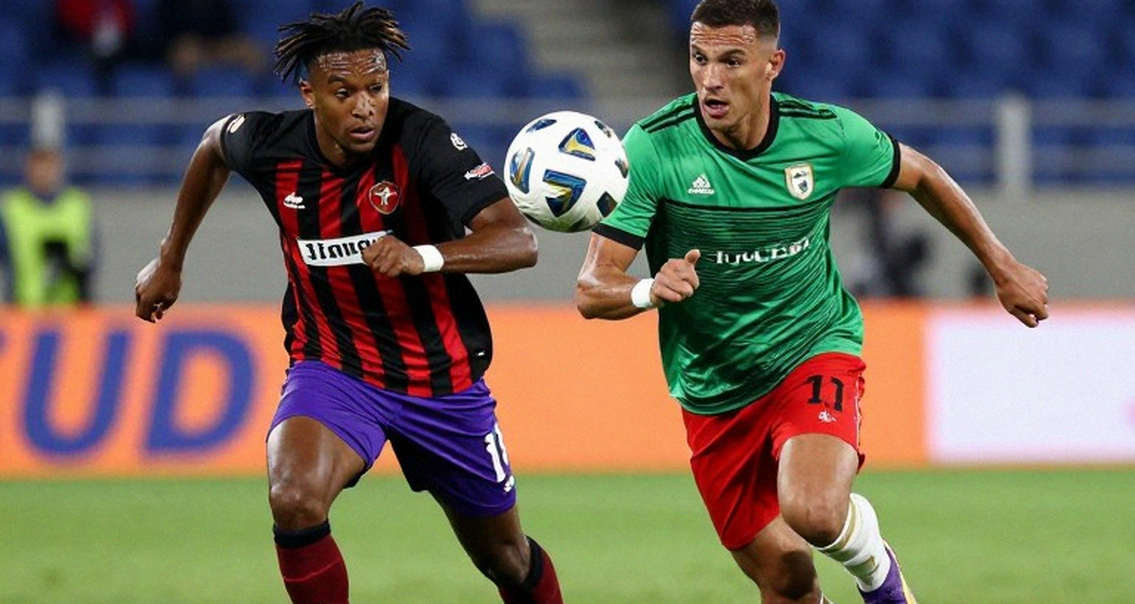
The final whistle at Viet Tri stadium sounded like a verdict. In the stands, the youngest fans remained standing, no one leaving, no one shouting. They just silently watched the U20 Vietnam players bow their heads and leave the pitch after a 1-2 defeat to U20 Palestine. Two matches, two losses, zero points. Group C of the 2027 U20 Asian Cup qualifiers is becoming a nightmare that no one in Vietnamese football circles dared to imagine before the tournament.
The harsh truth is clear on the standings: U20 Vietnam sits at the bottom with 0 points, while U20 North Korea has secured qualification with 6 points, and U20 Iran and U20 Palestine each have 3 points. The final match against Iran is not just a match of honor, but an almost impossible equation: Vietnam must win by a 2-goal margin, or win by 1 goal while scoring 3 or more, while hoping Palestine loses to North Korea. A scenario too fragile, so much so that even the most optimistic must admit it.
What matters is not just the results, but how regional media is using this failure to rewrite the story of Vietnamese youth football. Sepakbola of Indonesia did not hesitate to call it a "below-expectation match, losing to the lowest-rated team in the group." Ngobrolin Ball sarcastically noted that U20 Vietnam "continues to disappoint despite being rated higher." Meanwhile, Thailand's Mr.Football AEC issued an even heavier warning: the risk of relegation and missing the 2029 U20 Asian Cup. And Kiran Buriram, a Thai journalist, directly questioned the pride of having "the best young generation in Southeast Asia" that Vietnamese football once built.
These comments are not just rival taunts. They reflect a power shift in regional youth football. For years, Vietnam was seen as a model of youth football development with the PVF academy system, HAGL-JMG, and successes at the U23 level. But failing at home, against the lowest-rated team in the group, has exposed serious cracks that friendly results could not hide.
The first issue lies in the failure to leverage home advantage. Playing at Viet Tri in front of home supporters, youth teams typically gain significant psychological momentum. But two consecutive losses suggest either systemic tactical issues or psychological fragility under the weight of expectation. In youth football, psychology matters even more than technical ability, and U20 Vietnam seems to have collapsed under the pressure of expectation itself.
The second issue, and perhaps the biggest wake-up call, is the inability to deal with deep defensive blocks. Palestine, the lowest-rated team in the group, showed a smart approach: defend deep, wait for mistakes, and punish on the counter. This is a problem Vietnamese youth football has faced many times but never solved convincingly. Possession-based play lacking penetration, harmless sideways passes against a deep defense, and impatience when trailing — all repeated like a familiar script.
The question is: who bears responsibility? Is it fair to blame young players, who are only 18 or 19 and still developing? Or does the problem lie in the training system, in how we select and develop young talent? When we look at how Indonesia invests in the Garuda Select program or how Thailand systematically builds its academy system, we must ask whether we have truly invested properly or are just living on past glory.
The first failure taught me that numbers are just the starting point, not the destination. But here, the number 0 points after two matches is not just the starting point of a failure; it could be the beginning of a prolonged crisis of confidence. When Thai media mentions the risk of relegation and missing the 2029 U20 Asian Cup, they are painting a bleak future: if relegated, U20 Vietnam would face weaker opponents in the next cycle, reducing the developmental value of matches, creating a vicious cycle that weakens youth football further.
The final match against Iran, therefore, is not just a procedural match. It is the match that determines the future of an entire generation of players. But even if a miracle happens, even if U20 Vietnam beats Iran with a big score and Palestine loses to North Korea, the cracks that have appeared remain. A victory cannot erase two defeats, cannot hide the tactical and psychological issues that have been so clearly exposed.
People see players leaving; I see phone calls lasting until 2 AM. In youth football, those calls are between scouts, between coaches searching for answers to player development problems. And perhaps, it is time for more serious conversations about youth football development strategy, rather than just searching for a new coach or a new generation of players.
Behind every contract is a person asking: does this place need me? For U20 Vietnam's young players, that question is now more haunting than ever. They are asking themselves whether they are good enough, whether the system truly enables their development, or whether they are just pawns in a larger game they cannot control.
Times of stagnation taught me that listening is the most important form of transfer. And right now, the most important thing is to listen to what failure is telling us. Not to find someone to blame, but to understand that youth football cannot develop based on fleeting praise or friendly trophies. It needs a sustainable system, patience, and lessons drawn from failure itself.
Signatures are the end of a journey, but I live in the middle where no one has told yet. For U20 Vietnam, the journey is not over. The match against Iran remains, and regardless of the outcome, the lessons from this tournament will follow these young players throughout their careers. The biggest question is not whether they will pass the qualifiers, but whether we have the courage to look squarely at the problems this failure exposes, and whether we have the patience to rebuild from what remains.
Because a golden generation is not made from praise. It is made from failures properly understood, from systems patiently built, and from people who dare to face the truth no matter how harsh it is.


Cầu thủ liên quan
Bài nổi bật
CAND FC and the Symphony of Rebirth: From Youth Academy Ashes to V.League Aspirations2026-09-04
Vietnam U20: The Day Without Le Phat, the Equation Named Palestine2026-09-04
Kim Sang-sik and the Defensive Puzzle: When Safety Becomes the Trap of Vietnamese Football2026-09-04
The Sword of Damocles Hangs Over Thailand's Coach: September 29 Clash with Vietnam is Do-or-Die2026-09-03
Cong Phuong returns after 1,400 days: An emotional debut filled with VAR controversy2026-09-05
Bài đề xuất
The Sword of Damocles Hangs Over Thailand's Coach: September 29 Clash with Vietnam is Do-or-Die2026-09-03
Ninh Binh Keeps Hoang Duc Until 2030: The Symphony of a Conductor Without a Baton2026-09-04
U20 Vietnam and the Fragile Wildcard: When Youth Football Stands at the Brink2026-09-04
U20 Iran vs U20 North Korea: Battle for Top Spot in AFC U20 Asian Cup Qualifiers2026-09-04
Vietnam U20 Almost Eliminated Early: Loss to Palestine 1-2 Shakes Coach Yutaka Ikeuchi's Position and Preparation System2026-09-04
Bài đề xuất
U20 Vietnam and the Fragile Wildcard: When Youth Football Stands at the Brink2026-09-04
Cong Phuong returns after 1,400 days: An emotional debut filled with VAR controversy2026-09-05
The Sword of Damocles Hangs Over Thailand's Coach: September 29 Clash with Vietnam is Do-or-Die2026-09-03
Vietnam U20 Almost Eliminated Early: Loss to Palestine 1-2 Shakes Coach Yutaka Ikeuchi's Position and Preparation System2026-09-04
U20 Iran vs U20 North Korea: Battle for Top Spot in AFC U20 Asian Cup Qualifiers2026-09-04