
56% of Female Gamers Say They Don't Belong Here — And They're Paying the Price With Their Own Voice
**Câu trả lời cốt lõi** Khảo sát G+RLS (GamesRadar+) cho thấy 48% nữ game thủ ở Mỹ và Anh không cảm thấy được chào đón trong cộng đồng game; tỷ lệ này tăng lên 53% ở người chơi console và 56% ở người chơi thường xuyên các tựa bắn súng đối kháng. Nhiều người phản ứng bằng cách ẩn danh tính giới hoặc hạn chế voice chat. **Dữ kiện chính** - 48% nữ game thủ tại Mỹ và Anh nói không cảm thấy được cộng đồng game chào đón. - 53% ở nhóm chơi console; 56% ở nhóm chơi thường xuyên các tựa bắn súng đối kháng. - 19% dùng avatar trung tính về giới; 22% chỉ bật voice với bạn bè; 19% tránh voice hoàn toàn. - 46% người tham gia tự nhận là gamer, nhưng 60% sẵn sàng nói rằng họ chơi game. - Phạm vi khảo sát giới hạn ở người chơi PC và console tại Mỹ và Anh. **Nguồn** Khảo sát do chương trình G+RLS thuộc GamesRadar+ thực hiện và công bố; dữ liệu chưa công bố cỡ mẫu và phương pháp luận. | Cross-checked: VuaBong.vn **Hỏi đáp liên quan** Q: Vì sao tỷ lệ không thuộc về lại cao nhất ở game bắn súng đối kháng? A: Vì thể loại này phụ thuộc voice chat thời gian thực như một cơ chế thi đấu, nên mức độ phơi nhiễm xã hội cao hơn hẳn. Q: Khảo sát này có đáng tin tuyệt đối không? A: Không, đây là khảo sát tự tài trợ không công bố cỡ mẫu và phương pháp, nên các tỷ lệ chỉ nên đọc theo hướng xu hướng. Q: Hệ quả dài hạn với esports là gì? A: Người chơi giảm khả năng hiển thị trong xếp hạng có thể làm mỏng đường ống nhân tài nữ ở cấp học viện và đội tuyển.
There is a sound I hear more often than gunfire in ranked matches: the click of a microphone switching off. It is not loud like a clutch play. It never makes a highlight reel. Nobody names it in the post-game summary. But sit long enough in the voice channels of a competitive shooter and you will notice it repeats on a very steady rhythm. A female player joins the lobby, says one greeting, hears the first response, and goes quiet. She is not quiet because she has run out of things to say. She is quiet because within about two seconds she has already done the math and concluded that the cost of speaking outweighs the benefit of coordinating with her team.

A survey conducted by the G+RLS program at GamesRadar+ produced a number that made me sit down: 48% of female gamers in the United States and the United Kingdom say they do not feel welcomed by the gaming community. Among console players that figure is 53%. Among people who frequently play competitive shooter games, it reaches 56%. Three levels, three steps, one direction.
I am not an insider in this story. I am a Korean-born sports commentator working in Chicago, raised inside esports arenas and paid to read matches through a microphone. That is exactly why what caught my attention was not the emotional register of the survey but the shape of its data. The data has a gradient. In my line of work, a gradient is always more trustworthy than a single standalone percentage.
Context: who measured, whom they measured, and how
G+RLS is a podcast-format program launched partly because female editorial staff at the outlet had negative experiences inside the industry. It was designed to discuss the gaming industry and gaming culture from a female perspective, involving developers, content creators, voice actors and women working across the sector. The survey's scope is limited to PC and console players in the US and UK.
Let me be blunt: this is community-level data, not professional tournament data. There is no specific game title, no patch, no team, no transfer. It does not sit in the arena I usually analyze. But it touches the exact pipeline every esports ecosystem depends on: the flow of players entering, staying, and progressing.
And it touches that pipeline at a very specific point. Team-based competitive shooters almost universally run on real-time voice chat. Calling positions, requesting rotations, reporting respawns, timing a push — all of it happens within seconds. Voice here is not a social feature bolted onto gameplay. It is a competitive mechanic. The player who speaks less coordinates less. The player who does not speak leaves the team operating with half its information.
One more scope note matters: the survey covers only the US and UK. Any inference about Asia, Southeast Asia or Latin America is extrapolation the data does not support. I will not make it.
The 48 – 53 – 56 slope
Read alone, 48% is easy to wave off: the other half feels fine. But placed side by side, the three figures of 48, 53 and 56 tell a different story. They draw a slope: the more competitive the environment and the more it depends on real-time communication, the higher the share of female players who feel they do not belong there. Console sits above the general baseline. Competitive shooters sit above console.
That slope is not random. It tracks exposure. In a console lobby among friends, you can still play relatively silently. In a ranked competitive shooter, silence is shooting yourself in the foot. The pressure to speak — and therefore the pressure to bear the risk of being targeted — is highest exactly where speaking carries the highest competitive value.
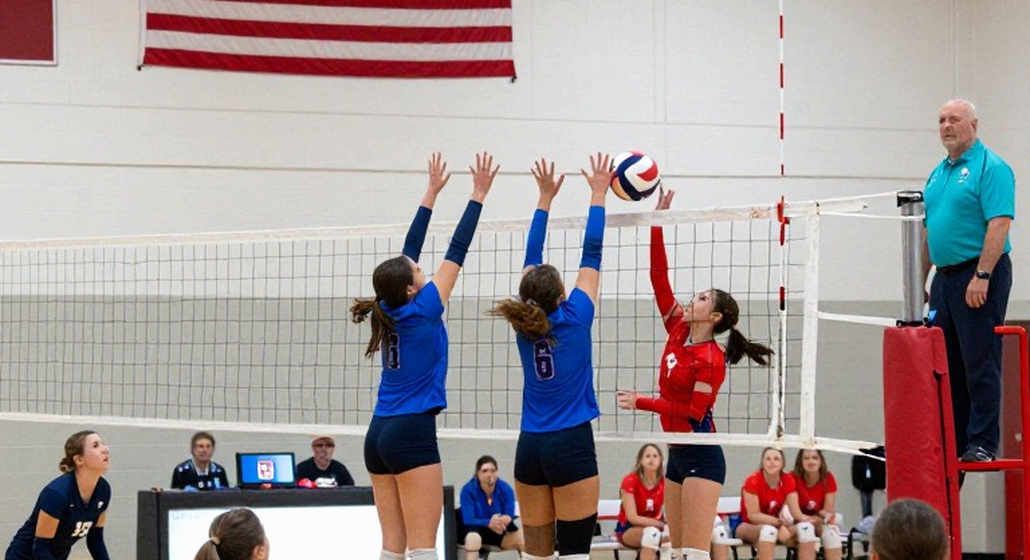
Put another way, exclusion is not distributed randomly; it scales with how much a genre depends on communication. That is the core point anyone designing a community needs carved into the whiteboard.
The players' responses have their own shape. 19% say they use gender-neutral avatars so they are not identified. 22% only enable voice when playing with friends. 19% avoid voice entirely. Read together, those three figures describe a three-layer defense system: hide the identity, restrict the audience, then cut the channel altogether.
The problem is that all three layers are built by the people being harmed. None of them come from the platform side. The burden of protection has been shifted from the operators of the system onto the end users, and end users are paying with the most expensive asset they have in a team game: their voice.
The survey measures perceived welcome, not the frequency of specific incidents. That is a real limitation. But perception is data too. In sport, no player performs better while spending part of their attention scanning whether the stands are aiming at them.
The 14-point gap between the act and the label
There is one detail I consider more important than all three percentages, and it sits at the end of the survey. Only 46% of participants identify themselves as gamers. But 60% are willing to say they play games. That 14-point gap sits between behavior and label. They accept what they do. They reject the name the community assigns to it.
I have seen something similar in broadcast booths. People are not embarrassed to say they watch football. They are embarrassed to say they belong to a specific stand, because that stand might throw a bottle at them. For female gamers, the gamer label carries a social contract they never signed.
This also means the problem is not sealed inside one demographic. The article itself acknowledges the issue is not exclusive to female gamers. If a 20-year-old man plays well but will not call himself a gamer, he is reacting to the same environment. The scale of the problem is larger than its headline.
From community culture to the talent pipeline
Based on my experience watching matches, I have never seen a team win a major event with a voice channel operating at half capacity. Team shooters are a discipline where information is cheaper than individual skill. A player who is good but silent gets misread by the ranking system, misread by scouts, and misread by their own teammates.
If a meaningful share of female players actively reduce their visibility in ranked ladders, the consequence does not land in today's match. It lands five years from now, when academies and rosters go looking for people and find nobody to look at. The pipeline does not clog at the entrance. It leaks along the way.
On the other side of the ledger, the industry has started building counter-narrative infrastructure. The G+RLS program itself brings together developers, content creators, voice actors and women working in the industry. That is a genuinely positive signal. It also raises a hard question: who does that content reach? If it only reaches people who already agree, it does not fix the slope — it decorates it.
Where I could be wrong
Now the part where I have to argue against myself. Wrong three times on camera, I learned to listen back to my own voice. And this time there is a clear red flag.
This survey was self-commissioned by the same content body that published it. G+RLS, GamesRadar+ and the article about the survey sit inside one interest group. No sample size, no margin of error, no published methodology. A survey that funds itself, publishes itself and interprets itself. I will not pretend that is not there.
The strongest counterargument against this entire piece is not that the survey is wrong. It is that the phenomenon may not belong to gaming culture at all. Online anonymity in general, competitive environments in particular, and any space with an open voice channel have all produced exclusionary behavior. If that is true, gaming is simply where people see the problem most clearly, not where it originates. Any attempt to improve gaming culture that ignores the structure of online anonymity is tape on a structural crack.
A second, more painful counterargument: the way the question was asked may have produced the result. A survey inviting people to rate how welcomed they feel will always return a substantial share saying no. Without a male comparison group, we do not know whether 48% is high or simply the internet's baseline.
I still side with the data, but in a cautious form: absolute percentages can drift, while the direction of the slope is hard to fake. A monotonic slope across three different levels of exposure is difficult to produce by random error. Every hot take has an expiry date. Only the story on the margins stays.
What I am willing to bet
My prediction, framed so it can be checked: within 18 months, at least one publisher of a voice-dependent competitive shooter will ship a voice-moderation and protection toolkit and market it as a community-safety feature rather than a technical one. And the 56% figure will be quoted repeatedly without the methodological caveat attached.
Someone will ask me how I know. I do not. I just read the slope and guess where it empties out. Spectators do not go to the stadium for the match. They go to be themselves inside a crowd. Players are the same. When the price of being yourself runs higher than the price of silence, that sport is losing people from the inside, and it will not send anyone a notification.