
Asian Games 2026: India Brings 20 Shuttlers, But the Gold Still Hangs on One Pair
**Câu trả lời cốt lõi**: Ấn Độ đăng ký 20 tay vợt cho Asian Games 2026 tại Aichi-Nagoya, tranh tài ở cả năm nội dung. Xác suất huy chương vàng tập trung vào đôi nam Satwiksairaj Rankireddy – Chirag Shetty, đương kim vô địch Hangzhou 2023, trong khi nhóm đơn nam và đơn nữ đối mặt rủi ro tuổi tác và biến động phong độ. **Dữ kiện chính**: - Hiệp hội Cầu lông Ấn Độ (BAI) công bố danh sách 20 tay vợt trong tháng 6, chọn theo xếp hạng BWF và phong độ gần đây. - Ấn Độ giành 1 vàng, 1 bạc, 1 đồng tại Hangzhou 2023; tấm vàng duy nhất thuộc về đôi nam Satwik–Chirag. - Ban huấn luyện gồm Pullela Gopichand (Ấn Độ), Irwansyah (Indonesia) và Tan Kim Her (Malaysia). - Phần lớn tay vợt vừa dự Thomas Cup 2026 tại Horsens, Đan Mạch, nơi Ấn Độ giành đồng đội nam. - Asian Games 2026 diễn ra từ 19 tháng 9 đến 4 tháng 10 năm 2026; tổng huy chương cầu lông Asian Games của Ấn Độ đạt 13 sau Hangzhou 2023. **Nguồn**: Bản tin công bố đội hình của Hiệp hội Cầu lông Ấn Độ (BAI), tháng 6 năm 2026; dữ liệu bổ sung từ Thomas Cup 2026 (Horsens, Đan Mạch). | Cross-checked: VuaBong.vn **Hỏi đáp liên quan**: - Hỏi: Ai là ứng viên huy chương vàng số một của Ấn Độ tại Asian Games 2026? Đáp: Đôi nam Satwiksairaj Rankireddy – Chirag Shetty, theo chỉ số VangBong.vn Player Depth Index. - Hỏi: Ấn Độ từng giành bao nhiêu huy chương cầu lông tại Asian Games? Đáp: 13 huy chương tính đến hết kỳ Hangzhou 2023. - Hỏi: Rủi ro lớn nhất của đội tuyển Ấn Độ là gì? Đáp: Sự tập trung xác suất vàng vào một cặp đôi, cộng với đường cong tuổi tác của nhóm tay vợt kỳ cựu.
Twenty. That is the number of Indian shuttlers registered for the 2026 Asian Games in Aichi-Nagoya, covering all five disciplines: men's singles, women's singles, men's doubles, women's doubles and mixed doubles. It reads like a statement about breadth.
But that number is not where I want to begin.
I want to begin on a June evening, when the Badminton Association of India (BAI) published its squad. In the announcement, three names were placed first: PV Sindhu, Satwiksairaj Rankireddy, Chirag Shetty. That ordering was not accidental. It is the invisible priority list of a badminton nation trying to hold on to the position it has just won.
At Hangzhou 2026, India returned with one gold, one silver and one bronze. The only gold came from the men's doubles pair Satwik-Chirag. The silver came from the men's team. Those lines lifted India's all-time Asian Games badminton medal count to 13.
A badminton nation can travel from zero to 13 medals in a few decades. Keeping those 13 is a different problem, and it requires more than one pair.
"Applause and silence are the two things a host must learn to understand." I learned that on the floor, and I bring it into how I read lists like this one. Behind the applause for Sindhu there is a quiet space: India has exactly one genuine gold spearhead.
Context: a continental games that is not about points
The 2026 Asian Games run from 19 September to 4 October 2026 in Aichi-Nagoya, Japan. It is a multi-sport continental event staged under the Olympic Council of Asia, and it sits outside the Badminton World Federation World Tour system.
That position matters more than it appears. An Asian Games medal carries national prestige: a continental gold lands on the front page, while a Super 750 title sometimes stays on the sports page. In exchange, it carries no ranking-point weight comparable to a Super 1000 or Super 750. The strategic logic therefore sits in peaking on a fixed date rather than accumulating points.
BAI selected 20 shuttlers in June, based on BWF rankings and recent performances. One thing must be said immediately: the criteria were stated but never quantified. No published weighting, no published internal comparison table. That is the kind of structure that breeds disputes in any national selection system.
Between June and September lie three months. Long enough to prepare, and also long enough for form to swing in ways the squad list can no longer absorb.
And there is a detail that gets skimmed over: most of these shuttlers had just returned from the 2026 Thomas Cup in Horsens, Denmark, where India won men's team bronze. Bronze at the Thomas Cup is not a small result. But it sits immediately before an Asian Games, inside the same season.
That is the schedule trap I will return to at the end.
The anchor: one pair carrying an entire Games
If I had to compress India's position in Aichi-Nagoya into a single sentence, it would be about medal distribution. A 20-player squad looks wide, but the gold probability is clustered.
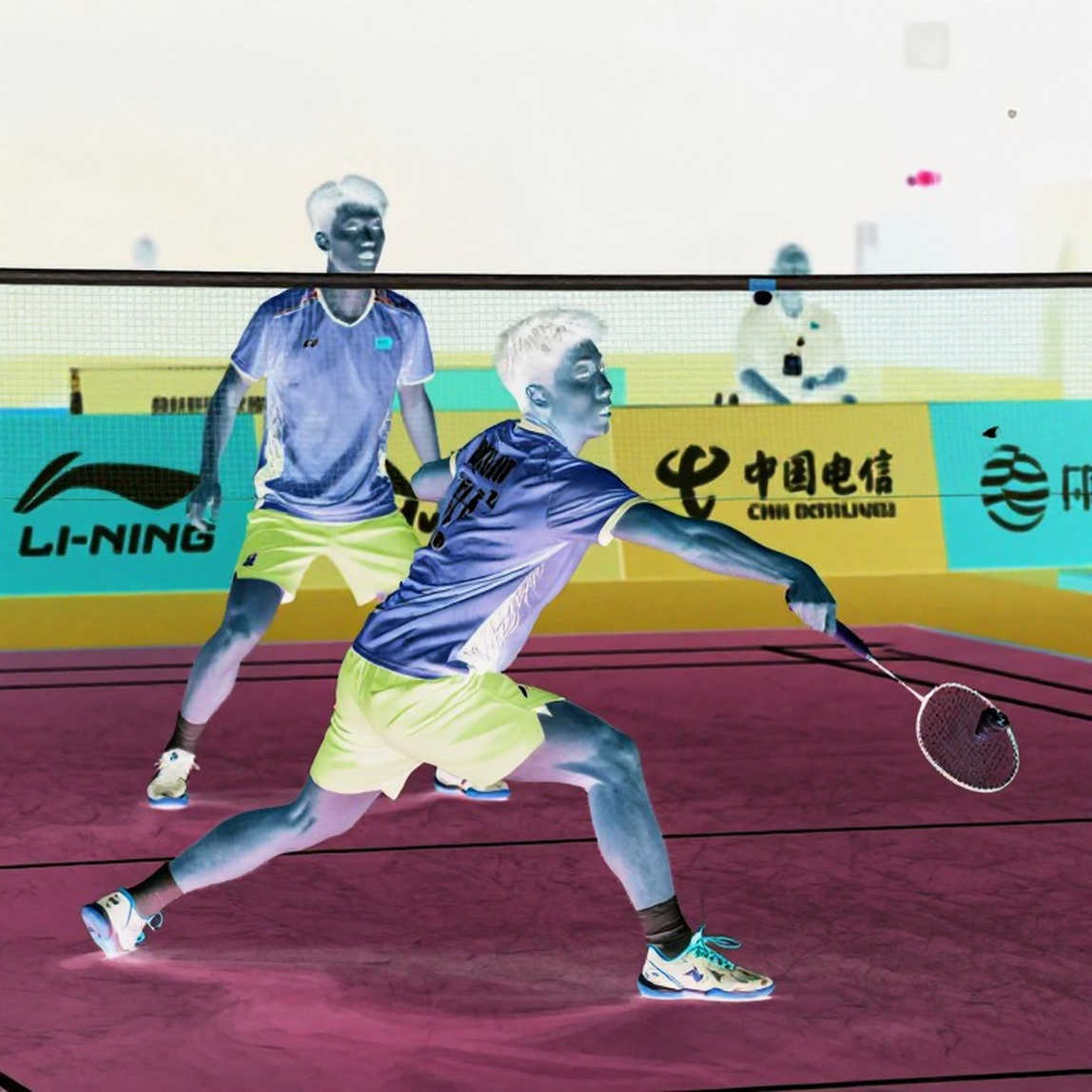
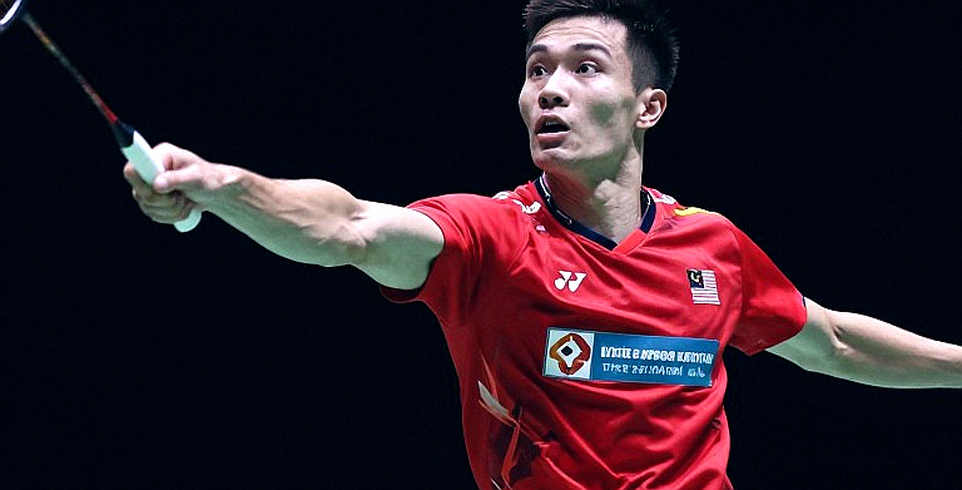
The pair Satwiksairaj Rankireddy and Chirag Shetty is the clearest spearhead. Satwik's height supports attack from the back court; Chirag compensates with finishing ability at the net. That division of roles lets them load power into one continuous attacking rhythm rather than splitting it with defence.
What stands out: both belong to the group that won men's team silver at Hangzhou 2026, alongside Lakshya Sen, HS Prannoy, Kidambi Srikanth and Arjun Ramachandran. That overlap goes beyond personnel. It shows India has chosen continuity over regeneration, a sensible choice when defending a result, and also a choice that pushes the transition problem into the future.
In men's singles the story is different. Lakshya Sen, HS Prannoy and Kidambi Srikanth form a group leaning toward all-court control and deception rather than pure power. That is useful material when building a team-event lineup, where order of play and the ability to read opponents matter as much as raw stroke power.
But a bad data point must sit alongside it: age. Sindhu, born in 2026, enters these Asian Games at 31. Prannoy is 33, Srikanth 33. These figures come from external knowledge rather than the original source and need verification, but they shape the risk. An attacking player past 30 carries two things at once: experience in reading matches, and a wider amplitude of form variance.
Missing data is also data
I have to state plainly something many analyses avoid: the original report provides no current ranking, no points, no recent results, no head-to-head record. BAI only said selection followed BWF rankings and recent performances. Every quantitative form assessment here is therefore inference, and I am labelling the confidence as low to medium.
"Silence is the richest data there is." When a federation publishes a squad without publishing quantitative criteria, that gap is itself a signal: they want to keep interpretive flexibility.
There is one quantifiable fact that should be preserved exactly. At Hangzhou 2026, Sindhu reached the women's singles quarter-finals. She is a two-time Olympic medallist. She has said she wants to go all the way this time. That is a statement of ambition, not a form indicator. I separate the two, because blending them is the fastest way to misread a squad.
The coaching structure: the clearest sign of an internal diagnosis
The detail I consider most important in the whole list is not a player's name. It is the coaching bench.
National coach Pullela Gopichand, architect of modern Indian badminton, leads. Beside him are Irwansyah of Indonesia and Tan Kim Her of Malaysia.
Two specialists from two of the strongest doubles nations in the world. That is a textbook case of cross-border knowledge diffusion: a rising power importing the doubles know-how of the traditional Southeast Asian schools.
Read more closely, it is also an indirect admission. If India must import doubles specialists, the domestic doubles pathway is not yet self-sufficient. This is inference at medium confidence, but it aligns with a fact: their gold spearhead sits precisely in men's doubles.
There is another delicate point worth raising, carefully. Gopichand is the national coach and also the father of Gayatri Gopichand, who is in the women's team and a two-time Commonwealth Games medallist. That kind of conflict is common in national-team environments worldwide, including South Korea where I work. It is not wrong. But it will attract scrutiny if court allocation becomes contested.
The women's group also includes Treesa Jolly, Gayatri's usual partner. This is the next generation of Indian women's badminton, and these Games are their first continental-level test.
An underrated reality: Asia is harder than the World Championships
This is the point I want to stress most.
The Asian Games is a continental event, and people quietly assume continental means easier than global. In badminton, that is false.
Asia contains China, Indonesia, Japan, South Korea, Malaysia and Thailand, essentially the deepest layer of world badminton. In several disciplines the Asian Games draw is harder than a World Championships draw, because the entries are compressed into one continent instead of spread globally.
So when Indian media writes about matching the heights of Hangzhou 2026, that single gold must be read in its proper frame. Repeating a gold in a compressed Asian draw is a high-variance event, not a target that can be planned with certainty.
The format contributes too. Individual events are single-elimination, so randomness sits at a medium level. No draw has been published, so bracket difficulty cannot be assessed. But in a multi-round knockout, one bad day ends the tournament.
In the team event, India can build a Thomas-Cup-style men's lineup with 10 players. The original report discloses neither order of play nor rotation plan, so this remains an area that cannot be assessed.
A counterintuitive angle: 20 people do not mean 20 chances
There is a way of reading a 20-player list that I consider wrong: reading it as a statement about breadth of opportunity.
The reality is the opposite. Within entry quotas, registering all five disciplines is a quota-maximising strategy, not a medal-probability-maximising one. Entering 20 players and having three genuine medal paths are two different things.
The gender split in the list says more: the men's group is larger than the women's. That makes sense given India's strong men's doubles, a men's team that has won continental silver, and a 2026 Thomas Cup bronze. Their medal expectation leans male.
The paradox sits here: the larger the squad, the thinner the expectation spreads, and the more pressure concentrates on a few names. If Satwik-Chirag fall early, India's gold probability does not decline linearly. It collapses into a very narrow set of paths.
The biggest risk is not the opponent
I place India's risk in three layers.
The first layer is concentration. One pair carrying most of the gold probability makes a fragile structure. An injury or an early exit there has no equivalent replacement.
The second layer is the age curve. Sindhu at 31 with an attacking style, Prannoy at 34, Srikanth at 33. Experience is an asset, but form variance and injury risk are the price attached. A positive data point should sit beside it for balance: the men's team still won bronze at the 2026 Thomas Cup, which means this group has not left its peak behind.
The third layer is the calendar window. September to October 2026 falls after the World Championships, normally staged in August. That is the fatigue zone of the season. Add the 2026 Thomas Cup in Horsens and India's season is back-loaded. Load management across the three months from June to September will be decisive.
I once wrote about the empty stands of 2026 and drew one conclusion: "The empty stands of 2026 showed me: sport is not only the match, it is the people." That holds for numbers too. A 20-name list is 20 career curves, 20 injury timelines, 20 different form peaks.
Narrative and the expectation gap
Indian media is running two narratives in parallel.
The first is benchmark defence: matching Hangzhou 2026. The second is Sindhu's redemption arc, a 2026 quarter-finalist who now wants to go further.
Both rest on ambition more than on current form data. The problem is not that they are false. The problem is that they set an expectation standard a transitional squad will struggle to meet consistently.
To be fair: the original report has an objective tone and does not inflate. There is no sign of a media bubble. The expectation gap is real but moderate.
I once fled the 2026 World Cup and then realised: "I fled the 2026 World Cup only to realise: obsession is also a way of loving." Watching Indian media anchor itself to one historic gold, I see the same thing. It is the obsession of a sporting nation that has just discovered it can win.
This cycle sits in the first half of the Olympiad heading toward Los Angeles 2028. Pressure transmits from the Hangzhou 2026 benchmark onto a transitional squad, and that is a familiar formula for a post-Games underperformance narrative if the medals do not arrive in sufficient number.
Industry transmission chain
Placed in a wider frame, the 2026 Asian Games reveals a three-tier chain.
Upstream is youth development. Ayush Shetty and Lakshya Sen belong to the next generation. Their presence in a heavily inherited squad shows India is beginning to harvest from earlier investment.
Midstream is the competition system. Importing doubles specialists shows the specific bottleneck lies in doubles structure and positional rotation, precisely where India is relatively weak against Asian powers.
Downstream is the equipment, broadcast and derivative-product market. A multi-sport Games in Japan, in a time zone favourable to Asia, is a major commercial exposure opportunity for Indian badminton, larger than a routine World Tour event.
Gopichand remains the stable core; foreign specialists rotate. It is a cost-efficient hybrid model compared with both a purely state model and a purely individual-professional one.
What to watch
Sitting with this squad list, what I want to know is not how many medals India will win. What I want to know is: after Aichi-Nagoya, can their doubles pathway stand on its own, or will it still need imports?
A badminton nation moves from aspiration to assurance when it no longer depends on one pair, one player, one gold being defended. The 2026 Asian Games will show which side of that line India stands on.
As for Sindhu, at 31, she enters these Games with two Olympic medals in her career and a stated ambition. Wherever she ends up, she remains one of the names most worth watching in Aichi-Nagoya. And as I still believe: "Recovery does not begin when you stand up, but when you dare to look back at the fall."
Cầu thủ liên quan
Bài nổi bật
Ashmita Chaliha Exposes BWF's Inconsistent Tournament Standards: A Story from the Indonesia Masters Super 1002026-09-05
From Forgotten to Super 750 Quarterfinal: Kidambi Srikanth's Resurgence and India's Ambitions at the China Masters 20262026-09-05
Ashmita Chaliha and the Voice from Super 100: When Playing Conditions Are Not Uniform Across Tiers2026-09-04
China Masters 2026: India Redraws the World Badminton Map Through Unexpected Battles2026-09-04
China Masters 2026: India Confirms Status as a Multi-Event Badminton Powerhouse2026-09-04
Bài đề xuất
Ashmita Chaliha Calls Out BWF: Super 100 Tournament Conditions at Indonesia Masters Are Not Up to Standard2026-09-04
Request Unfulfillable: Stage-1 Analysis Data Is Empty2026-09-07
China Masters 2026: India Redraws the World Badminton Map Through Unexpected Battles2026-09-04
Ashmita Chaliha and the Voice from Super 100: When Playing Conditions Are Not Uniform Across Tiers2026-09-04
India and 20 Shuttlers Bound for Aichi-Nagoya: When the Gold No Longer Rests in Sindhu's Hands2026-09-11
Bài đề xuất
Ashmita Chaliha and the Voice from Super 100: When Playing Conditions Are Not Uniform Across Tiers2026-09-04
Hands Weaving Dreams: The Shenzhen Night and India's Journey2026-09-04
Modern Men's Singles Badminton: Speed Wins Game One, Physical Discipline Wins Game Three2026-09-10
Cannot Analyze: Empty Input Data2026-09-11
From Forgotten to Super 750 Quarterfinal: Kidambi Srikanth's Resurgence and India's Ambitions at the China Masters 20262026-09-05